A beautiful carpet can change the atmosphere of a room. It adds warmth, character and a sense of craftsmanship. But when you invest in a handmade carpet, one question matters: how can you tell whether it is genuinely hand-knotted? Two rugs may look similar from the front while differing significantly in construction, materials and performance. Whether you are furnishing a home, sourcing for an interior project or evaluating a hand-knotted carpet manufacturer in India, these seven practical checks will help you buy more confidently.
1. Examine the Back of the Carpet
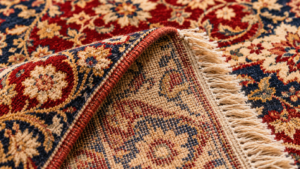
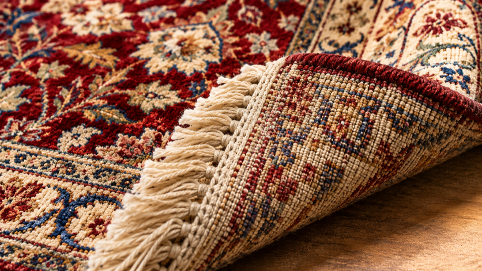
Turn the rug over and study the reverse. In a traditional hand-knotted rug, artisans tie individual knots around the foundation threads, and the design is usually visible on the back. Small variations are normal in handmade work. Still, irregularity alone does not prove authenticity: some machine-made products imitate a handmade look. Ask for clear photographs of both sides before purchasing remotely.
If you are comparing rugs online, request a close-up of the reverse at the centre and near the border. A clear photograph with a ruler beside the weave makes it easier to understand the scale of the knots. Avoid relying on a distant photograph of the entire carpet.
2. Look Closely at the Fringe
On many traditional hand-knotted rugs, the fringe is an extension of the warp threads that form the foundation. In contrast, some machine-made rugs use decorative fringe stitched on later. This is a useful clue, not a definitive test. Genuine handmade rugs may have shortened, repaired or specially finished ends. Evaluate the fringe alongside the knot structure.
3. Understand Knot Density
Knot density is often expressed as knots per square inch (KPSI). A higher count can allow intricate patterns and finer detailing, but it does not automatically make one carpet superior. A lower-density wool rug may be expertly woven and better suited to a particular room. When comparing a hand-knotted rugs manufacturer in India, consider material, design, consistency and intended use—not just a single number.
Ask how the knot count was measured and whether it refers to individual knots or another unit of construction. Compare rugs of similar materials and designs rather than treating the number as a universal grading system.
4. Confirm the Fibre Composition
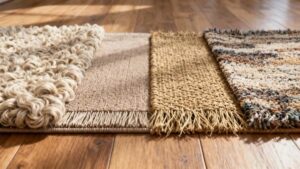
The material affects texture, comfort, resilience and care. Wool is appreciated for warmth and natural resilience; silk is valued for sheen and fine decorative details; cotton often forms the foundation; and wool–silk combinations create visual contrast. Ask for exact fibre specifications. A rug intended for daily living-room use may have different requirements from a delicate decorative piece.
5. Appreciate Craftsmanship Without Excusing Defects
Hand-knotting is a labour-intensive process. Slight differences in pattern alignment or knot tension may reflect the handmade process, but loose construction or significant distortion should not be overlooked. Check whether the rug lies reasonably flat and whether its design, texture and finishing are consistent. A credible manufacturer should be able to explain how it was woven.
Look at the carpet in natural light from more than one direction. Pile direction can change the apparent shade, so a change in colour as you move around the rug is not necessarily a defect.
6. Inspect Edges and Finishing
Look at side bindings, corners and end finishes for loose threads, damage or poor workmanship. These details matter because edges experience handling over time. For remote orders, request close-up images. For substantial orders, a physical sample is useful for checking the texture, material and finish before committing.
7. Verify the Manufacturer and Product Information
Ask where the rug is made, which materials are used, whether its construction is genuinely hand-knotted, what customisation is available, and how quality is checked. Written specifications are especially important for international orders. A reliable hand-knotted carpet manufacturer in India should answer reasonable questions clearly rather than relying only on attractive product photos.
For a remote purchase, ask for a written description of the pile fibre, foundation, dimensions and construction. Keep this information with your invoice so that you can refer to it when arranging cleaning or resolving a product discrepancy.
Why Indian Hand-Knotted Carpets Attract Buyers
India has a long carpet-weaving tradition, with Bhadohi in Uttar Pradesh particularly associated with handmade carpet production. Buyers can find traditional and contemporary patterns across a wide range of materials and sizes. Anyone seeking a hand-knotted rugs and carpets manufacturer and exporter in India should compare craftsmanship, specifications, communication and inspection processes alongside price.
Frequently Asked Questions
How do I identify a genuine hand-knotted carpet?
Check the back, knot structure, fringe, materials and finishing together. No single visual clue is completely reliable.
Does a higher knot count always mean better quality?
No. It may allow finer details, but materials, construction and intended use are equally important.
Are hand-knotted rugs suitable for everyday use?
Many well-constructed wool rugs are suitable for regular use; suitability depends on material, construction and traffic.
Can handmade rugs be customised?
Many manufacturers offer custom sizes, patterns and colours, subject to production requirements.
Final Thoughts
Authenticity is easier to assess when you know what to examine. Start with the construction, confirm the fibres, inspect the finish and ask clear questions about manufacturing. Genie Carpet Manufacturers invites buyers to explore its hand-knotted carpet collection and discuss design or project requirements. Request product details or a quotation to take the next step.